

THE CLIENT AND THE CHALLENGE
INNOVATION UNDER CONSTRAINTS
Dominion Energy was exploring vehicle-to-grid technology (using electric vehicle batteries to feed power back into the grid during high-demand hours) and needed a pilot built around a specific user segment. Our research showed that segment wouldn’t work. The real challenge was proving it, pivoting fast, and pitching a plan that could survive real-world constraints and stakeholder scrutiny.
GOAL
RESEARCH THAT DRIVES DECISIONS
Start by understanding the technology and its constraints, then identify and validate a feasible pilot segment that could reliably plug in during peak energy demand. Ground the recommendation in structured interviews and survey data, not assumptions.
MY PROCESS
STAY NEUTRAL, FOLLOW THE EVIDENCE
1
Test the Original Hypothesis
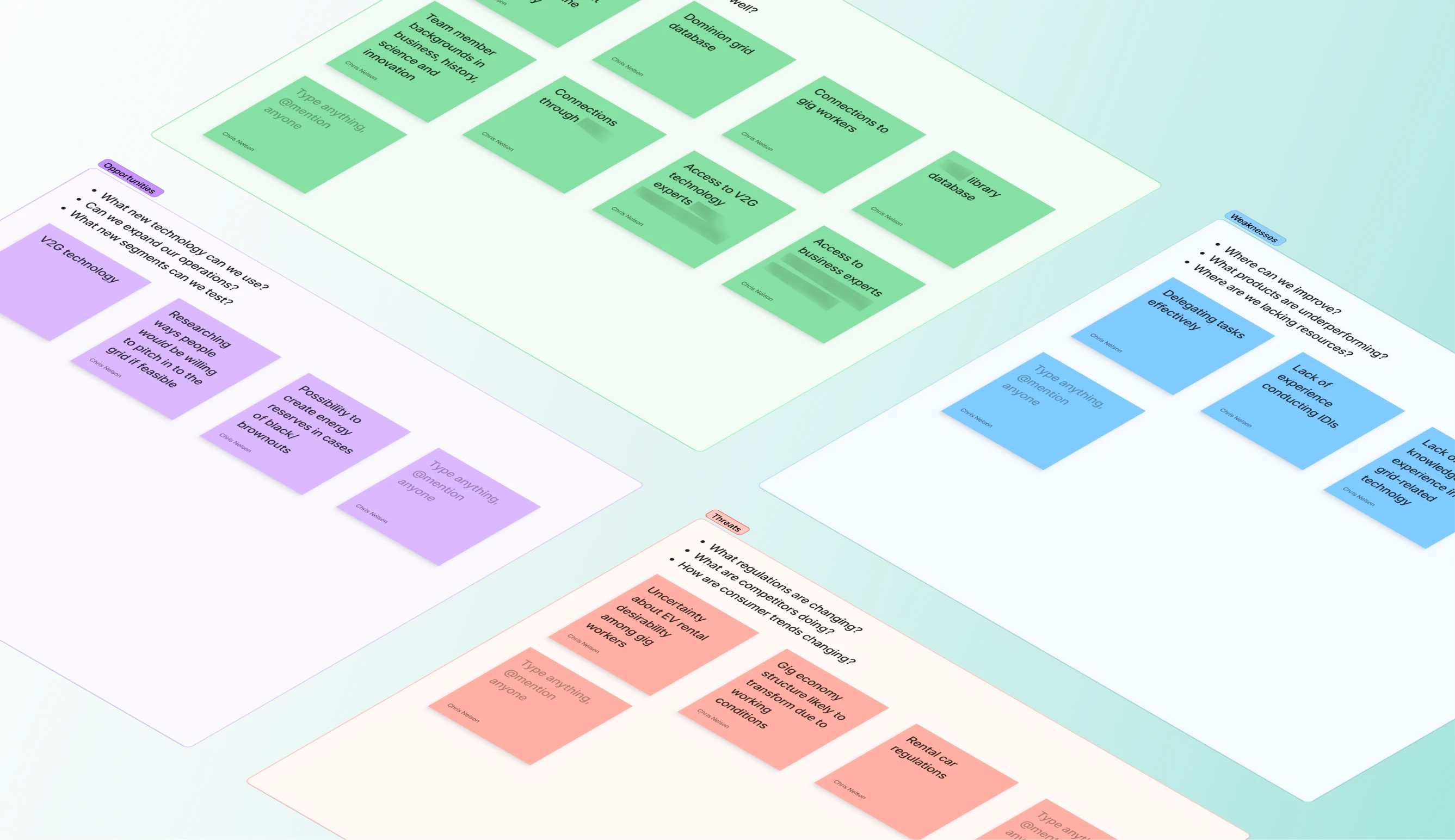
Planned and ran interviews across multiple potential segments, then pulled patterns from what surfaced. Paired qualitative input with survey data to stress-test assumptions.
Synthesize the Findings
Organized findings to surface themes, constraints, and dealbreakers.
2
Pivot With Criteria
Defined what had to be true for a viable pilot segment.
3
Validate New Segments
Ran a second round of research focused on the riskiest assumptions, using qualitative insight to round out personas and journey maps.
4
Translate Insights Into Artifacts
Turned findings into personas, journey maps and early concepts stakeholders could act on.
5
WHAT WORKED BEST
LETTING EVIDENCE LEAD THE PILOT
Stayed neutral, tested assumptions, and followed the evidence.
Letting Research Invalidate the Plan Early
Criteria for success made the pivot rational, not reactive, and saved time by ruling out weak segments early.
Defining Constraints Clearly
Artifacts as Alignment Tools
Artifacts became the paper trail, capturing what was believed, decided and why, so the work stayed accountable as it evolved.
RESULTS
FRAMING RESULTS FOR STAKEHOLDERS
The gig-driver fleet concept was structurally misaligned with peak energy demand needs.
Root Cause Identified
Pivoted to a Stronger Segment
Predictable schedules and consistent plug-in behavior replaced an unworkable fit.
Uncovered Real Value for Users
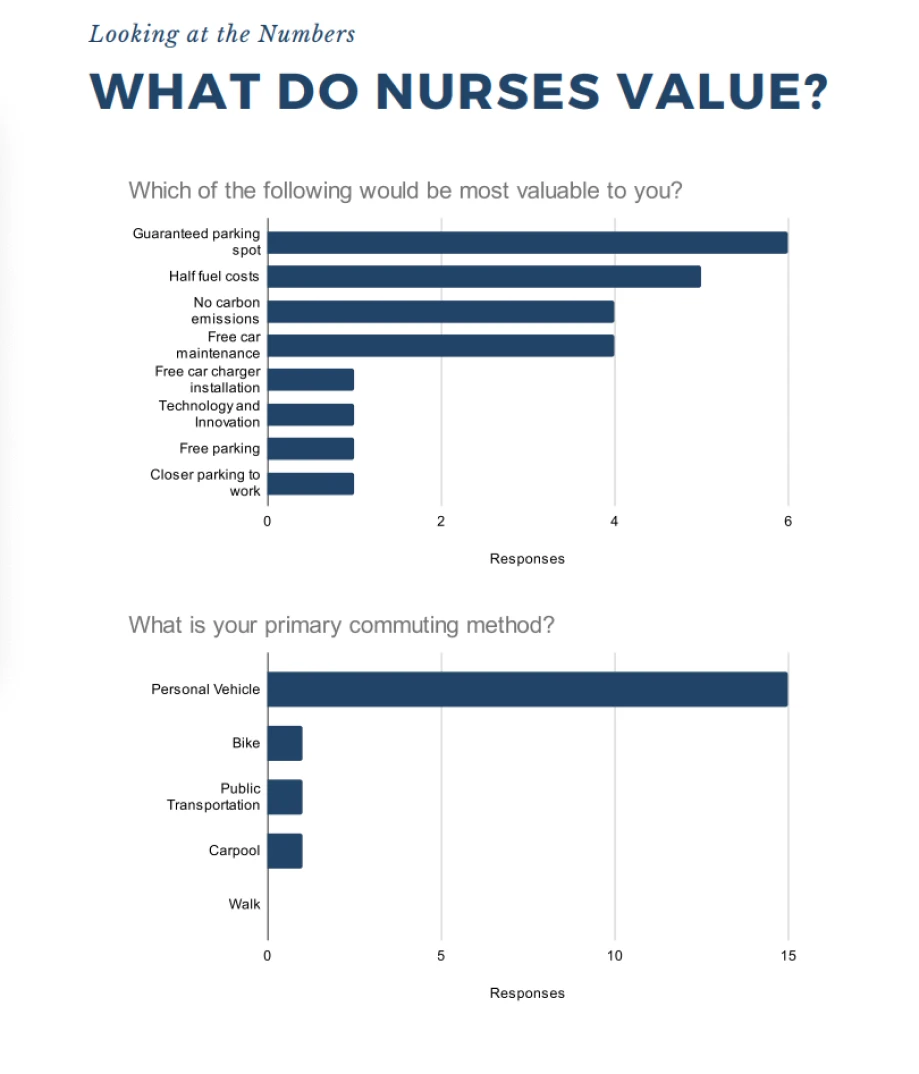
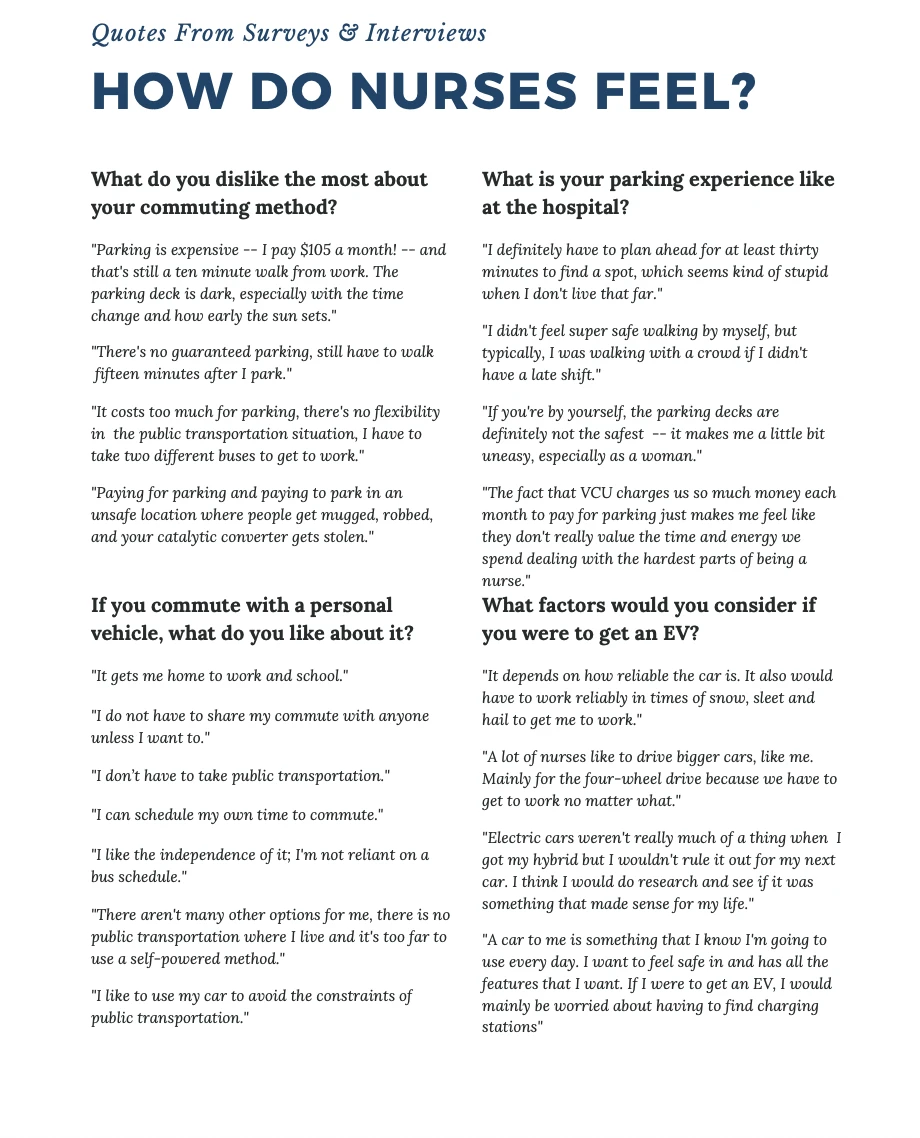
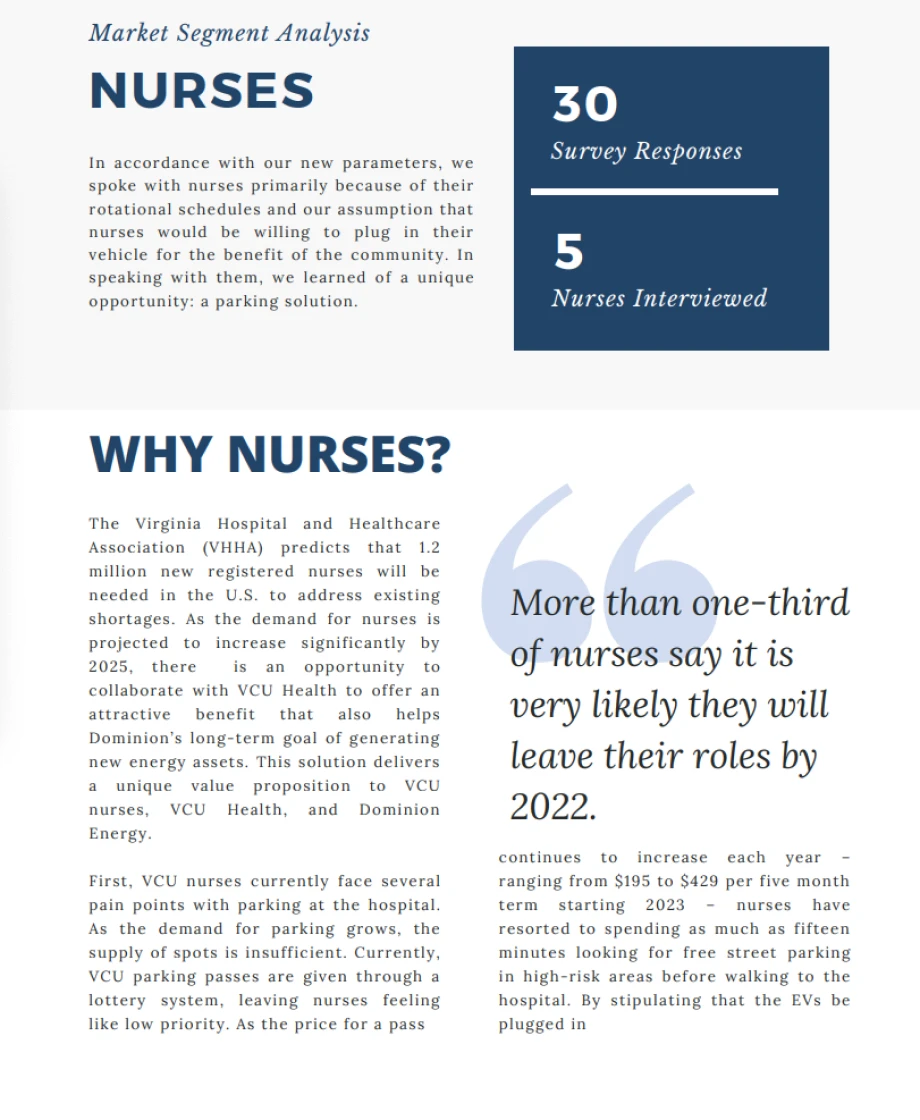
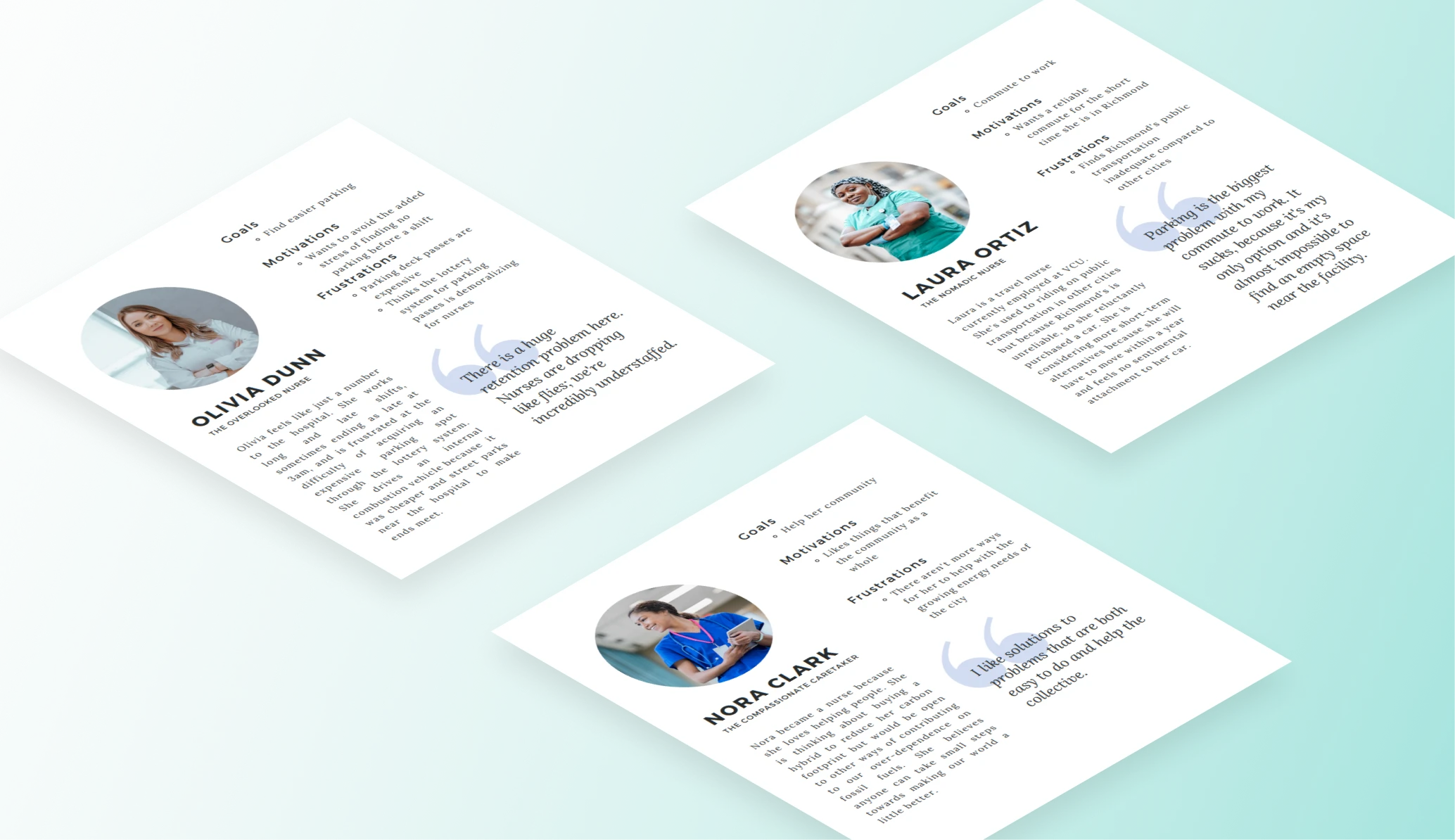
Healthcare workers offered a concrete value exchange, parking reliability and charging, that strengthened desirability.
Delivered Stakeholder-Ready Documentation
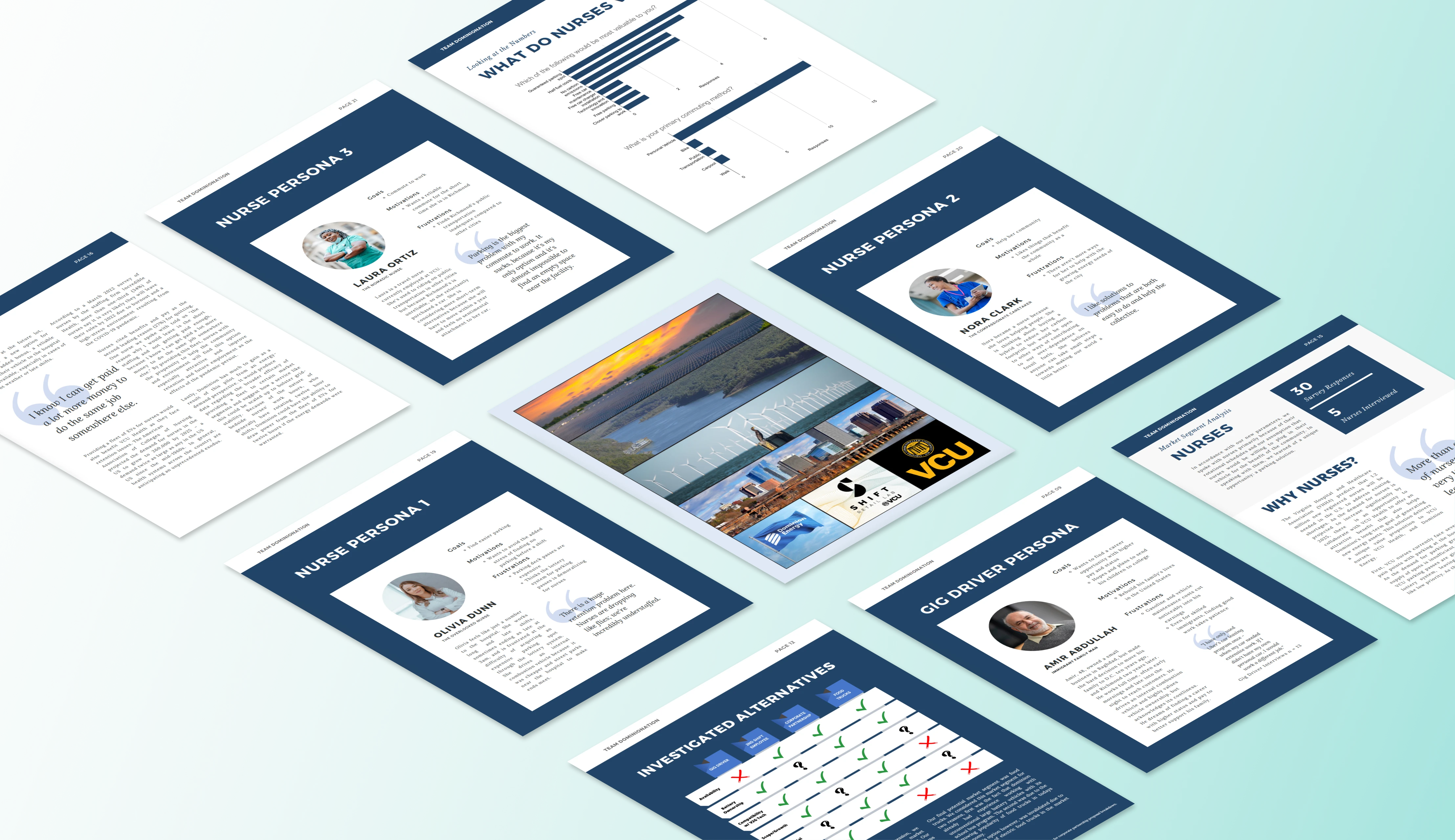
Personas, journeys, service blueprints and early concepts backed the final recommendation.
HOW MY PROCESS CHANGED
UNCOVERING ONE NON-NEGOTIABLE
Research Has to End in a Decision
Every project now closes with what changed and what's recommended, not just what was learned.
Say Yes to the Idea, Not the First Path
Committed to solving the right problem, even when the first plan didn't survive research.
Build Artifacts That Make the Pivot Clear
Documentation now shows the reasoning behind a decision, not just the conclusion.
Let Constraints Keep the Team Focused
Evidence and clear constraints, not opinions, decide what gets prioritized.